Rogue Eclipse Story and Setting
Space opera stakes without spoiling your first campaign loop.
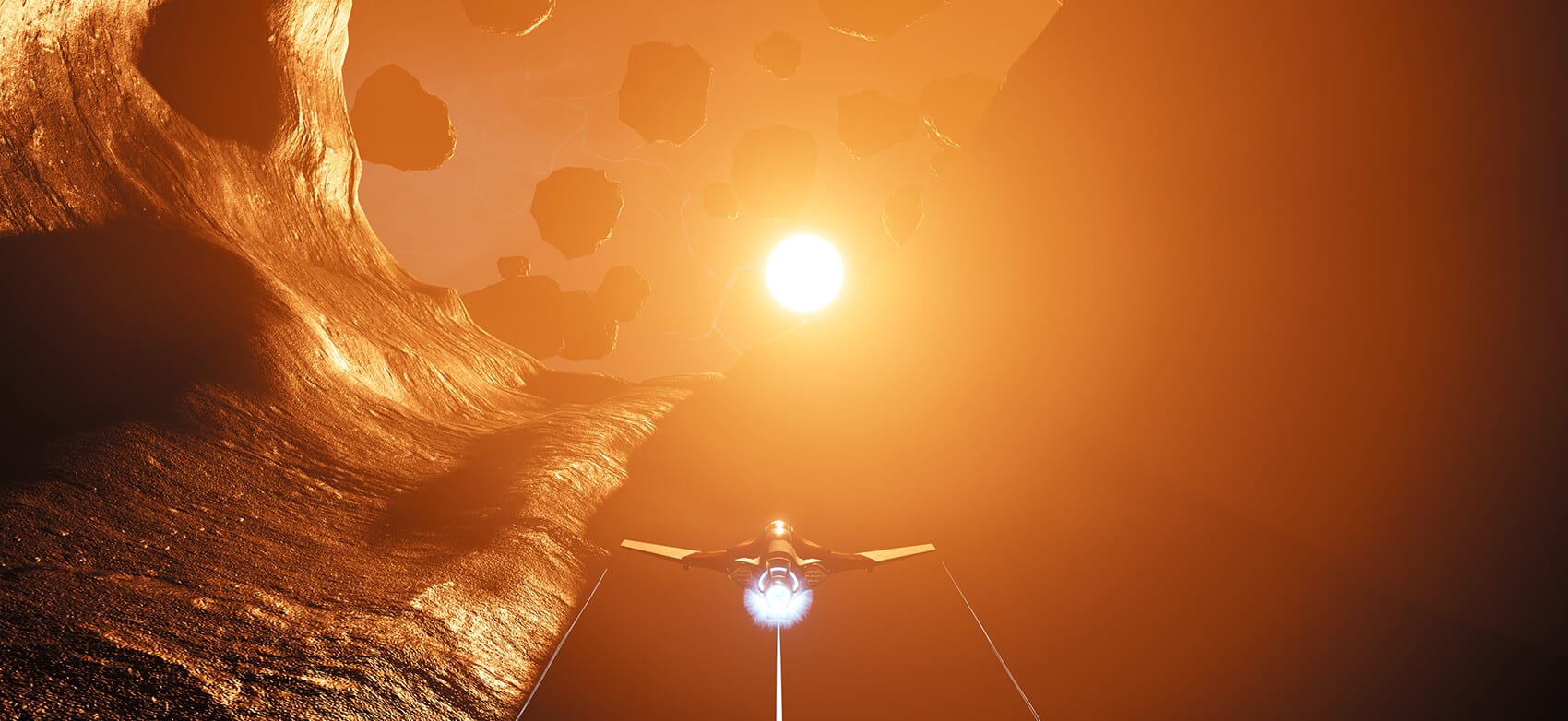
Rogue Eclipse is not only an arcade flight toy. Official materials sell a high-stakes space opera: you are a pilot on the front lines of a war for humanity’s future, facing swarms, merciless armadas, and a malevolent evil that threatens the cosmos. This page explains the setting fantasy, the tone called Arabesque Futurism, and how a roguelike campaign can carry narrative across multiple runs—without dumping late spoilers before your August 7, 2026 launch.
The pitch in one clean paragraph
You fly a customisable starfighter through pitched battles in deep space. You die, upgrade, and return. Each sortie pushes you closer to a nemesis while the look of the universe leans on Arabesque Futurism rather than grey military sci-fi. Expect readable spectacle: glowing threats, bold silhouettes, destructible interiors inside colossal behemoths, and a campaign structure that treats failure as part of the story rhythm.
For genre comparisons and feature lists, keep what is Rogue Eclipse open beside this page.
Arabesque Futurism as a design promise
HUSKRAFTS leans on Arabesque Futurism to signal ornament, motion, and mythic scale inside a futuristic war. In practical pilot terms that means:
- Environments should feel authored and stylish, not only functional arenas.
- Enemy readability still matters—beauty cannot hide telegraph spam forever.
- Customisation fantasy sits next to combat power, echoing Armored Core attachment to a machine.
- Arcade clarity (Star Fox lineage) still has to win when the screen fills with craft.
If a screenshot looks “too pretty to be hard,” remember the demo already pairs spectacle with multiple difficulties and lethal swarms.
Factions and names you will hear early
Public demo copy centres the Phiraun Armada as the immediate threat in the playable sector slice: the fleet is scattered and you are counted on to push that armada back. Treat Phiraun as the early war face players meet, not the entire mythos. Broader “malevolent evil” language in trailers and store text points at a larger nemesis structure that unfolds across the roguelike campaign.
This wiki will not invent faction hierarchies beyond what public materials support. When launch patches or artbooks expand names, update your notes beside the unlock checklist only if a reward is story-gated.
How narrative works in a roguelike campaign
Store features call out a roguelike campaign with a narrative that unfolds across multiple runs, plus light story elements and full voice acting already present in the demo. That combination usually means:
- Early runs teach tone and stakes.
- Mid runs reveal more of the war’s shape as you survive longer.
- Meta unlocks and personalisation make later attempts feel like the same pilot growing sharper.
Play story-first sessions on a calmer difficulty so VO and text remain audible. Mechanical mastery still lives in combat and survival and tips and tricks.
Behemoths as story architecture
Delving into hulking enemy behemoths is both a mechanical set piece and a narrative image: humanity’s fighter is tiny, the enemy war machine is cathedral-scale, and destructible interiors let you rewrite the cathedral. Read how to beat behemoths for the pilot checklist; keep this page for why those interiors matter to the fantasy.
What Outersloth and HUSKRAFTS signal
HUSKRAFTS is the UK indie studio led by Husban Siddiqi. Outersloth—Innersloth’s indie publishing arm—backs the release. That pairing explains why a stylish solo arcade roguelike can ship with polished VO and showcase presence (PC Gaming Show, Secret Sauce, Six One Indie, launch trailer) without feeling like a grey box prototype. Timeline context sits on news and trailers and pre-launch events.
Spoiler hygiene for day one
Safe to know before launch:
- Solo campaign, try-die-upgrade loop
- Humanity-versus-cosmic-threat framing
- Phiraun Armada as an early demo antagonist face
- Arabesque Futurism visual identity
- Behemoth interiors as signature set pieces
Avoid hunting full ending explainers before you play. Use demo vs full game for scope, release date and platforms for when to start the real campaign, and the day-one launch guide for practical prep.
Why setting pages belong next to builds
Builds answer how you win a sector. Setting answers why you care when a run ends. When a death tilts you, reread the fantasy for thirty seconds, then return to ship upgrades or beginner builds with a cooler head. The Overview Hub stays the fact pillar; this page is the tone pillar.
Story and setting knowledge is complete when you can explain Rogue Eclipse to a friend without listing every weapon: arcade space fighter, stylish Arabesque future war, Phiraun pressure early, behemoth delves, narrative across runs, launch August 7, 2026 on PC. Then go fly.
Frequently Asked Questions
Quick answers pilots ask before and after each run.
Is Rogue Eclipse story-heavy?
It presents a space-opera campaign with VO and narrative across runs, while still centering arcade action. Expect light-to-moderate story delivery, not a walking simulator.
Who are the Phiraun Armada?
Public demo text positions them as the merciless armada you push out of a sector slice. Treat them as an early war face, not a full spoiler map.
What is Arabesque Futurism here?
A visual and tonal inspiration: ornamental, mythic sci-fi spectacle instead of purely grey military hardware.
Will this page get ending spoilers later?
Launch updates may add safer mid-game context. Ending dumps will stay optional and clearly marked if added.